The Surprising Link Between Your BMI and Your Brain: Unlocking the Secrets to a Healthier Mind and Body
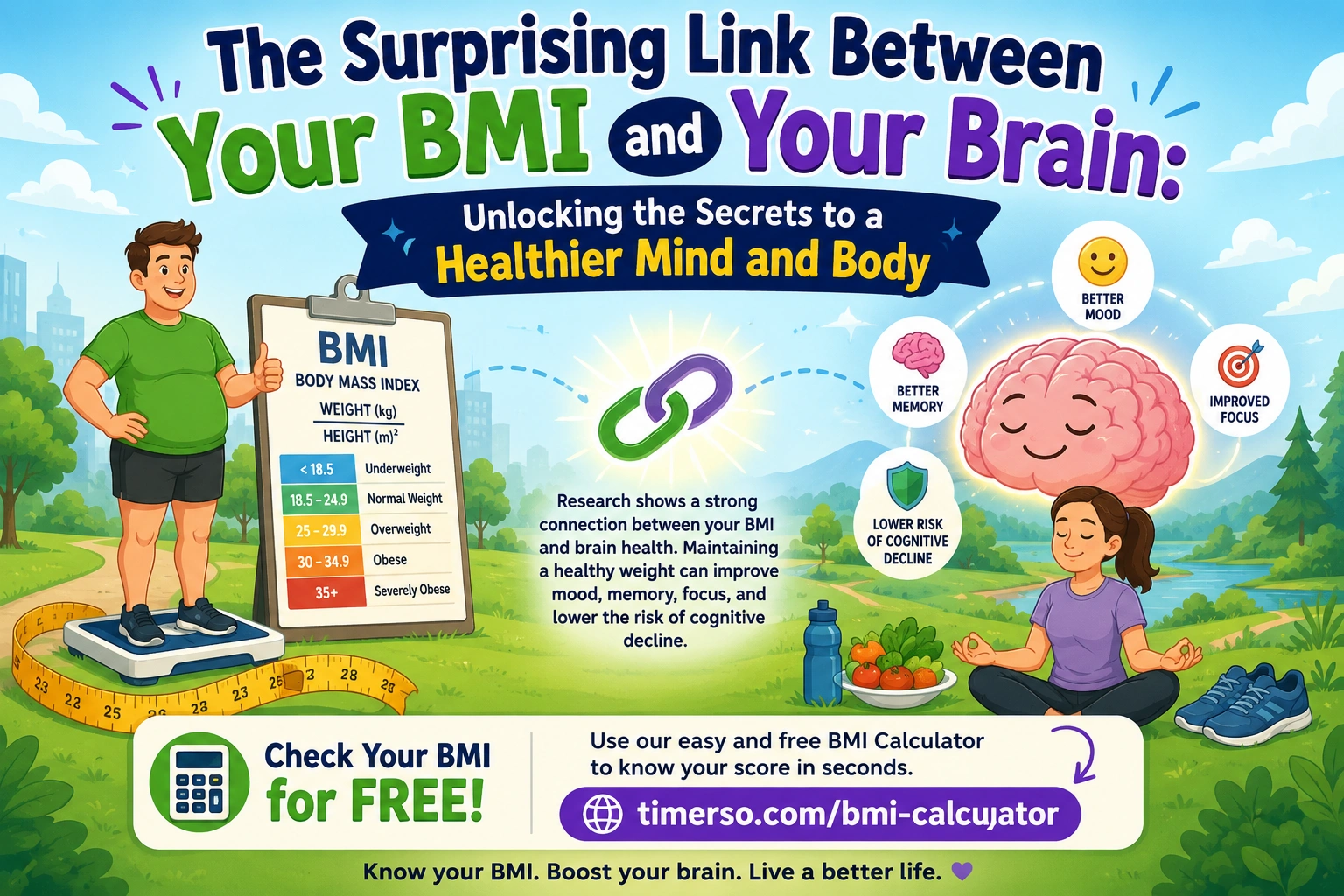 Visit timerso.com/bmi-calculator for a free BMI calculation.
As a certified health and wellness expert, I've had the privilege of delving into the intricate relationships between our physical and mental health. One fascinating discovery that has caught my attention is the surprising link between our Body Mass Index (BMI) and our brain function. In this article, we'll explore the complex connections between our BMI and brain health, and uncover the actionable advice to support a healthier mind and body.
Introduction
The World Health Organization (WHO) defines Body Mass Index (BMI) as a person's weight in kilograms divided by the square of their height in meters. While BMI is not a perfect measure of health, it provides a useful estimate of body fat based on height and weight. However, research has shown that BMI is not just a reflection of physical health, but also has a profound impact on our brain function and overall well-being.
Deep Dive: The Surprising Link Between BMI and Brain Function
Studies have consistently shown that individuals with a higher BMI are at a greater risk of developing cognitive decline, dementia, and even Alzheimer's disease. For instance, a 2018 study published in the Journal of Alzheimer's Disease found that individuals with a BMI above 30 were more likely to develop Alzheimer's disease compared to those with a normal BMI (18.5-24.9). Similarly, a 2020 study published in the Journal of Gerontology found that higher BMI was associated with a faster rate of cognitive decline in older adults.
But what's driving this link between BMI and brain function? One theory is that excess body fat leads to chronic inflammation, which can damage the brain and disrupt cognitive function. Another theory suggests that the same genetic factors that contribute to obesity may also affect brain development and function.
Core Concepts: The Impact of BMI on Brain Function
1. Insulin Resistance and Cognitive Decline
Insulin resistance, a hallmark of obesity, has been linked to cognitive decline and dementia. When the body becomes resistant to insulin, it leads to high blood sugar levels, which can damage brain cells and disrupt cognitive function.
2. Inflammation and Brain Health
Chronic inflammation, often present in individuals with a higher BMI, can lead to oxidative stress and damage to brain cells. This can result in impaired cognitive function, mood disorders, and even neurodegenerative diseases.
3. Sleep Disturbances and BMI
Sleep disturbances are common in individuals with a higher BMI, and chronic sleep deprivation can impair cognitive function, memory, and mood. This can create a vicious cycle, where sleep disturbances exacerbate weight gain and vice versa.
4. The Gut-Brain Axis and BMI
The gut microbiome plays a crucial role in regulating our brain function, and research has shown that an imbalance of gut bacteria (dysbiosis) is common in individuals with a higher BMI. This can lead to impaired cognitive function, mood disorders, and even neurodegenerative diseases.
Actionable Advice: Unlocking the Secrets to a Healthier Mind and Body
While the link between BMI and brain function is complex and multifaceted, there are several actionable steps you can take to support a healthier mind and body:
- Maintain a healthy BMI: Aim for a BMI between 18.5 and 24.9 to reduce your risk of cognitive decline and neurodegenerative diseases. Use online tools like https://timerso.com/bmi-calculator to calculate your BMI.
- Exercise regularly: Engage in moderate-intensity exercise for at least 30 minutes a day to improve insulin sensitivity, reduce inflammation, and promote sleep quality.
- Eat a balanced diet: Focus on whole, unprocessed foods, and limit your intake of sugary drinks, saturated fats, and refined carbohydrates.
- Get enough sleep: Aim for 7-9 hours of sleep per night to support brain health and weight management.
- Manage stress: Engage in stress-reducing techniques like meditation, yoga, or deep breathing exercises to reduce chronic inflammation and promote cognitive function.
Frequently Asked Questions (FAQ)
Q: Can I still have a healthy BMI and develop cognitive decline or dementia? A: Yes, while BMI is a risk factor for cognitive decline and dementia, it is not a guarantee. Other factors like family history, genetics, and lifestyle choices also play a role.
Q: Can I reverse the link between BMI and brain function? A: Yes, making healthy lifestyle choices, such as exercising regularly, eating a balanced diet, and getting enough sleep, can help reduce the risk of cognitive decline and neurodegenerative diseases.
Q: Can I use BMI as a sole indicator of health? A: No, BMI is not a perfect measure of health. Other factors like waist circumference, blood pressure, and blood sugar levels should also be considered when assessing overall health.
Conclusion
The link between BMI and brain function is complex and multifaceted, but by understanding the underlying mechanisms, we can take actionable steps to support a healthier mind and body. By maintaining a healthy BMI, exercising regularly, eating a balanced diet, getting enough sleep, and managing stress, we can reduce our risk of cognitive decline and neurodegenerative diseases. Remember, a healthy BMI is just one piece of the puzzle – it's essential to prioritize overall health and well-being to unlock the secrets to a healthier mind and body.
Disclaimer: This article is for informational purposes only and does not constitute medical advice. For professional health advice, always consult a qualified medical practitioner.