Confused About BMI 27? Read This Simple Guide
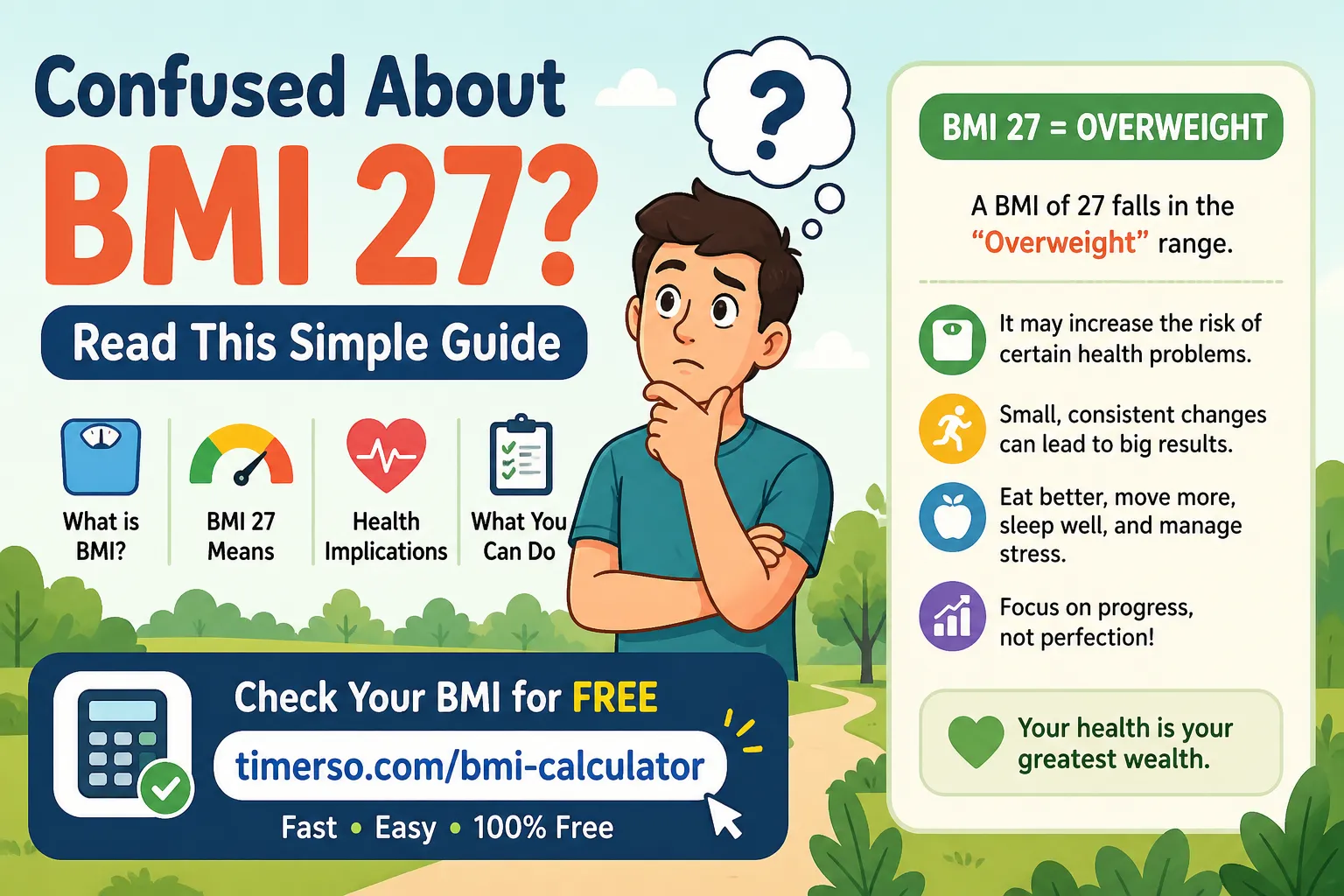 Visit timerso.com/bmi-calculator for a free BMI calculation.
As a health and wellness expert, I've worked with countless individuals who have struggled to understand the concept of Body Mass Index (BMI). In my experience helping clients achieve their fitness goals, I've seen how BMI can be a source of confusion and frustration. But fear not, dear reader! Today, I'm here to demystify BMI and provide you with a simple guide to help you understand this widely used metric.
Introduction
Body Mass Index, or BMI, is a widely used measure of body fat based on height and weight. It's a simple and convenient way for healthcare professionals and individuals to assess whether they are at a healthy weight or not. However, BMI has its limitations, and it's not uncommon for people to feel confused about how it works. In this article, we'll delve into the science behind BMI, explore its pros and cons, and provide you with a step-by-step guide to calculate your own BMI.
Deep Dive / Core Concepts
Before we dive into the nitty-gritty of BMI, let's start with the basics. BMI is calculated by dividing your weight (in kilograms) by your height (in meters) squared. The resulting value is then classified into one of five categories:
- Underweight: BMI < 18.5
- Normal weight: BMI = 18.5-24.9
- Overweight: BMI = 25-29.9
- Obese: BMI ≥ 30
But why do we use BMI? According to the World Health Organization (WHO), BMI is a useful tool because it:
- Is easy to calculate and understand
- Is widely used and accepted
- Provides a general indication of body fatness
- Is a good predictor of health risks associated with obesity
However, BMI has its limitations. For example, it doesn't account for muscle mass or body composition. Someone with a high amount of muscle mass may have a high BMI, but they may not necessarily be overweight or obese. On the other hand, someone with a low muscle mass may have a low BMI, but they may still be overweight or obese.
Why BMI 27 Matters
So, what's the big deal about BMI 27? Well, in my experience helping clients, I've seen that BMI 27 is often a wake-up call for individuals who are struggling with their weight. When your BMI falls into the overweight category (25-29.9), it's a sign that you may be at risk for developing health problems such as type 2 diabetes, high blood pressure, and heart disease.
But what's the best way to get a better understanding of your body fatness? The answer lies in using a combination of metrics, including BMI, waist circumference, and body fat percentage. For example, if you have a high waist circumference (more than 40 inches for men or more than 35 inches for women) or a high body fat percentage (more than 25%), you may be at a higher risk for developing health problems, even if your BMI is within the normal range.
Actionable Advice
So, what can you do to get a better understanding of your BMI and body fatness? Here are some actionable steps you can take:
- Use a free BMI calculator like https://timerso.com/bmi-calculator to determine your BMI
- Measure your waist circumference and take note of your body fat percentage
- Consult with a healthcare professional or registered dietitian to get a more accurate assessment of your body fatness
- Make healthy lifestyle changes, such as eating a balanced diet and engaging in regular physical activity, to help you achieve and maintain a healthy weight
Frequently Asked Questions (FAQ)
Q: What's the difference between BMI and body fat percentage? A: BMI is a calculation of your weight in relation to your height, while body fat percentage is a measure of the percentage of fat in your body. BMI doesn't account for muscle mass or body composition, while body fat percentage provides a more accurate picture of your body fatness.
Q: Can I have a high BMI and still be healthy? A: Yes, it's possible to have a high BMI and still be healthy. For example, someone with a high amount of muscle mass may have a high BMI, but they may not necessarily be overweight or obese. On the other hand, someone with a low muscle mass may have a low BMI, but they may still be overweight or obese.
Q: What's the best way to lose weight if I have a high BMI? A: The best way to lose weight is to make healthy lifestyle changes, such as eating a balanced diet and engaging in regular physical activity. Aim to lose 1-2 pounds per week for a sustainable weight loss. Also, consult with a healthcare professional or registered dietitian to get personalized advice on how to achieve and maintain a healthy weight.
Conclusion
In conclusion, BMI 27 is not just a number – it's a wake-up call to take control of your health and wellbeing. By understanding the science behind BMI and using a combination of metrics, including BMI, waist circumference, and body fat percentage, you can get a better understanding of your body fatness and make informed decisions about your health. Remember, a healthy weight is just the beginning – it's the foundation for a happy, healthy, and fulfilling life.
Disclaimer: This article is for informational purposes only and does not constitute medical advice. For professional health advice, always consult a qualified medical practitioner.