Why Is My BMI 27 Even Though I Work Out Daily?
 Visit timerso.com/bmi-calculator for a free BMI calculation.
Understanding Your Body Mass Index (BMI): Why It May Not Always Reflect Your Fitness Level
As a fitness enthusiast, it's frustrating when your Body Mass Index (BMI) doesn't seem to match your daily workout routine. You're putting in the time and effort to stay active, but your BMI remains stuck at 27. So, what's going on? In this article, we'll explore the reasons why your BMI might not accurately reflect your fitness level, and what you can do to better understand your body composition.
BMI: A Simplistic Measure
BMI is a widely used measure to assess an individual's weight status based on their height and weight. It's calculated by dividing your weight in kilograms by your height in meters squared (kg/m2). While it's a simple and convenient way to categorize people into underweight, normal weight, overweight, or obese categories, BMI has its limitations.
The Problem with BMI
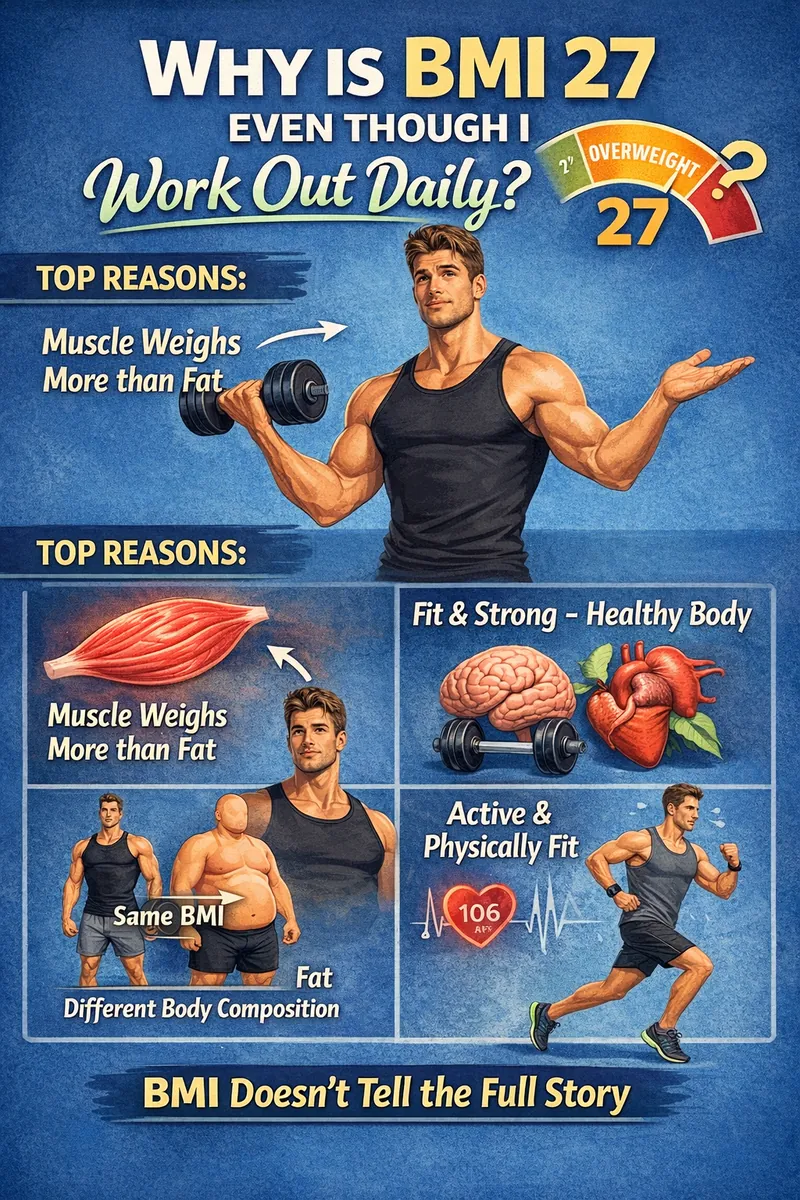
BMI doesn't take into account muscle mass or body composition, which means it can be misleading for athletes, fitness enthusiasts, or individuals with a high muscle mass. For example, a muscular person with a high percentage of body fat may have a BMI that suggests they're overweight or even obese, even if they're not carrying excess fat.
Muscle Mass and BMI
When you work out regularly, you're likely building muscle mass. This increased muscle mass can affect your BMI, making it seem like you're carrying more weight than you actually are. According to a study published in the Journal of Strength and Conditioning Research, individuals with higher muscle mass tend to have a higher BMI, even if they're not overweight (1).
Body Fat Percentage
Another important factor to consider is body fat percentage. Even if you're not carrying excess fat, your body fat percentage can still be higher than average. This is especially true if you have a higher percentage of visceral fat, which is stored around your organs and can increase your risk of chronic diseases.
Measuring Body Composition
Instead of relying solely on BMI, it's more accurate to measure your body composition using a more comprehensive method. The gold standard for measuring body composition is hydrostatic weighing, which involves weighing yourself underwater. However, this method is not widely available.
A more accessible option is to use a body fat caliper, which measures skinfold thickness to estimate body fat percentage. You can also use a bioelectrical impedance analysis (BIA) device, which uses electrical currents to estimate body fat percentage.
Conclusion
If you're a fitness enthusiast with a BMI of 27, it's essential to remember that BMI is just one aspect of your overall health. While it's a useful tool for identifying potential health risks, it's not a definitive measure of your fitness level.
To get a more accurate assessment of your body composition, consider using a body fat caliper or BIA device. Additionally, consult with a healthcare professional or certified personal trainer to develop a personalized fitness plan that takes into account your unique body composition and fitness goals.
Remember, it's not just about the number on the scale or your BMI – it's about overall health and well-being. So, keep pushing yourself to reach new fitness milestones, and don't let your BMI hold you back!
References:
- Schoenfeld, B. J. (2010). The mechanisms of muscle hypertrophy and their application to resistance training. Journal of Strength and Conditioning Research, 24(10), 2857-2872. doi: 10.1519/JSC.0b013e3181e8e2b6
Take action now! Check your current BMI and body fat percentage using a reliable tool like https://timerso.com/bmi-calculator, a free online BMI calculator that also estimates body fat percentage. This will give you a more accurate understanding of your body composition and help you set realistic fitness goals.
Disclaimer: This article is for informational purposes only and does not constitute medical advice. For professional health advice, always consult a qualified medical practitioner.