Should I Worry About a BMI of 27? Understanding Your Numbers Beyond the Scale
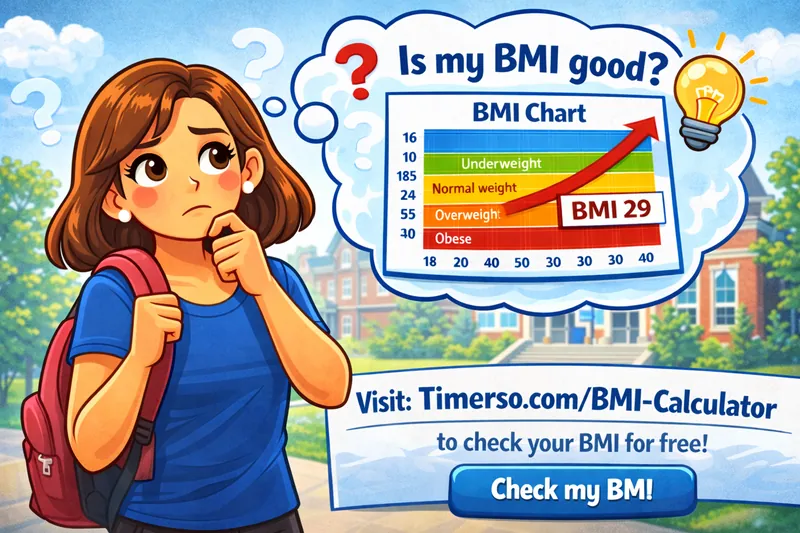
Getting your health metrics back from a doctor's visit or stepping on a scale can sometimes trigger unnecessary anxiety. If you have recently calculated your Body Mass Index (BMI) and landed on the number 27, your first instinct might be to panic. A quick search will tell you that a BMI of 27 falls into the "Overweight" category.
But does that mean you should be worried?
The short answer is no, you do not need to panic, but you should pay attention. In modern medicine, a BMI of 27 is considered a "yellow light." It is not a diagnosis of disease, but rather an invitation to look a little closer at your overall metabolic health.
In this comprehensive guide, we will break down exactly what a BMI of 27 means, why the formula has blind spots, and what actionable steps you should take next to ensure you are truly healthy.
What Does a BMI of 27 Actually Mean?
Body Mass Index is a simple mathematical ratio of your weight to your height. The World Health Organization (WHO) and the Centers for Disease Control and Prevention (CDC) use standard categories to classify these numbers for adults:
- Underweight: Below 18.5
- Healthy Weight: 18.5 – 24.9
- Overweight: 25.0 – 29.9
- Obesity: 30.0 and above
A BMI of 27 places you squarely in the middle of the "Overweight" category. Statistically, populations with a BMI in this range show a slightly elevated risk for developing conditions like type 2 diabetes, high blood pressure, and cardiovascular disease compared to those in the "Healthy Weight" range.
If you want to keep an eye on this metric and see how small fluctuations in weight impact your score, it is highly recommended to use a tool to check your current BMI. By bookmarking a free calculator like timerso.com, you can monitor your baseline accurately over time.
Why BMI 27 Doesn't Tell the Whole Story
Before you drastically cut calories or adopt an extreme workout regimen, it is crucial to understand that BMI is a screening tool, not a diagnostic tool. It measures excess weight, not excess body fat. Here is why a BMI of 27 might actually be perfectly healthy for you:
1. You Have a High Muscle Mass
Muscle tissue is significantly denser than fat tissue. If you lift weights, play sports, or have a naturally athletic build, your weight will be higher relative to your height. It is incredibly common for fit, healthy individuals with low body fat percentages to have a BMI of 27 simply because muscle is heavy.
2. You Are an Older Adult
As we age, a slightly higher BMI can actually be protective. Gerontologists often refer to the "obesity paradox," where older adults (typically 65 and older) with a BMI in the 25 to 27 range actually have lower mortality rates than those in the "normal" range. The extra weight provides a nutritional reserve and helps protect against bone fractures and frailty.
3. Your Fat is Subcutaneous, Not Visceral
Where you carry your weight is far more important than the weight itself. Subcutaneous fat (the fat you can pinch on your arms, hips, and thighs) is relatively benign. Visceral fat (the fat stored deep inside your belly around your organs) is highly inflammatory and metabolically dangerous. BMI cannot tell the difference between the two.
When Should You Actually Worry?
A BMI of 27 only becomes a red flag when it is paired with other metabolic risk factors. You should view your BMI as one piece of a much larger puzzle. You and your doctor should look for the presence of these accompanying factors:
- High Blood Pressure: Consistently reading above 130/80 mmHg.
- Elevated Blood Sugar: A fasting glucose level indicating prediabetes or an elevated HbA1c.
- Poor Cholesterol Levels: High LDL ("bad") cholesterol and high triglycerides, paired with low HDL ("good") cholesterol.
- A High Waist Circumference: This is the best indicator of dangerous visceral fat. For non-pregnant women, a waist measuring 35 inches or more, and for men, a waist of 40 inches or more, indicates elevated metabolic risk.
If your blood work is excellent, your waist circumference is low, and you feel energetic, a BMI of 27 is likely nothing to worry about.
Actionable Next Steps
If your BMI is 27 and you want to ensure you are on the right track, here is what experts recommend:
- Get a Comprehensive Physical: Ask your doctor to run a full metabolic blood panel to check your cholesterol, triglycerides, and fasting glucose.
- Measure Your Waist: Grab a tape measure and check your waistline just above your hip bones. This simple test is often more revealing than the scale.
- Focus on Body Composition, Not Weight Loss: Instead of trying to force your BMI down to 24 by starving yourself, focus on eating a high-protein, fiber-rich diet and lifting weights. Building muscle while losing fat might keep your BMI exactly at 27, but your body will be vastly healthier and leaner.
Conclusion
A BMI of 27 is not a reason to panic. While it falls into the "Overweight" category, human health is far too complex to be defined by a single 200-year-old math equation. Use a tool to check your current BMI to stay informed about your baseline, but always pair that number with real-world metrics like your blood pressure, waist circumference, and daily energy levels.
Authoritative References for Further Reading (E.E.A.T)
To ensure you are making informed decisions based on the highest standards of medical science, consult these trusted, peer-reviewed resources:
- Centers for Disease Control and Prevention (CDC) - About Adult BMI: Explains the clinical categories of BMI and explicitly details the limitations of the measurement regarding muscle mass and age. (cdc.gov)
- Harvard T.H. Chan School of Public Health: Offers in-depth research on the dangers of visceral fat versus subcutaneous fat, and why waist circumference is a critical measurement. (hsph.harvard.edu)
- National Institutes of Health (NIH): Features clinical studies on metabolic syndrome, cardiovascular risk factors associated with the "overweight" category, and the "obesity paradox" in older adults. (nih.gov)
- World Health Organization (WHO): Outlines global guidelines for assessing metabolic health beyond simple height and weight ratios. (who.int)
(Disclaimer: This article is intended for educational and informational purposes only and does not constitute medical advice. Because individual health profiles vary greatly based on genetics, body composition, and medical history, always consult with a licensed physician or registered dietitian for a personalized health assessment.)