Beyond the Scale: Why BMI is Misleading for Individual Health
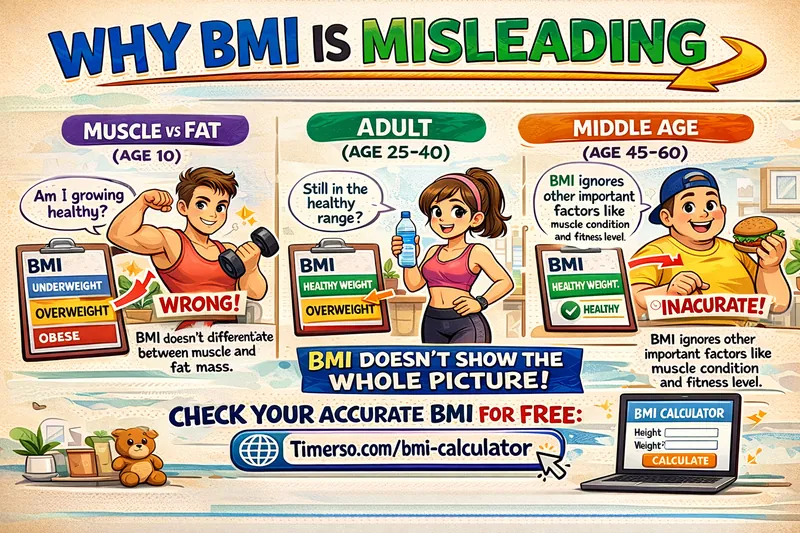
For generations, the Body Mass Index (BMI) has been the undisputed gold standard in doctor's offices, fitness centers, and public health campaigns. It is a number that has dictated insurance premiums, medical treatments, and how millions of people feel about their own bodies.
But there is a growing consensus among modern medical professionals, sports scientists, and dietitians: BMI is fundamentally flawed. While it can be a useful tool for tracking the health of massive populations, applying a simple mathematical formula to assess the nuanced, complex health of an individual often leads to misdiagnosis, frustration, and a skewed understanding of what it means to be healthy.
In this article, we will dive into the science of why BMI is misleading, its historical blind spots, and what metrics you should actually be paying attention to.
The Origin: Math, Not Medicine
To understand why BMI falls short, you have to look at its origins. The formula was not created by a doctor or a biologist. It was invented in the 1830s by Lambert Adolphe Jacques Quetelet, a Belgian astronomer and statistician.
Quetelet was trying to define the "average man" to assist governments in allocating resources. He explicitly stated that his formula—weight in kilograms divided by height in meters squared—could not and should not be used to indicate the level of fatness in an individual. Yet, over a century later, the medical and insurance industries adopted it because it was fast, cheap, and required no specialized equipment.
If you are curious about where you stand on this historical scale, you can use a tool to check your current BMI. Knowing your baseline at timerso.com is a helpful starting point, but as we will see, it is only the first chapter of the story.
3 Major Reasons Why BMI is Misleading
The core problem with BMI is that it measures excess weight, rather than excess body fat. Here is how that distinction creates massive inaccuracies.
1. The Muscle vs. Fat Dilemma
By volume, muscle is significantly denser and heavier than fat. Because the BMI formula only asks for your total weight, it is completely blind to your body composition.
A professional athlete, a bodybuilder, or even someone who regularly attends cross-training classes will often carry a high amount of lean muscle mass. On a BMI chart, these highly conditioned individuals are frequently categorized as "Overweight" or "Obese." The chart penalizes them for being muscular, leading to inaccurate assumptions about their cardiovascular health.
2. It Ignores Fat Distribution
Not all fat is created equal. Your health risks are heavily dictated by where you carry your adipose tissue. * Subcutaneous Fat: The fat that sits just under your skin (often on the hips, thighs, and arms) is relatively harmless from a metabolic standpoint. * Visceral Fat: This fat is stored deep within the abdominal cavity, wrapping around vital organs like the liver and pancreas. Visceral fat is highly inflammatory and directly linked to type 2 diabetes and heart disease.
Two people can have the exact same BMI, but if one carries their weight entirely in their abdomen and the other in their hips, their metabolic risk profiles are vastly different.
3. The "TOFI" Phenomenon and Demographic Flaws
BMI fails to identify people who are "Thin Outside, Fat Inside" (TOFI). Someone might have a perfectly "Healthy" BMI of 22, but still carry a dangerous amount of visceral fat and suffer from metabolic syndrome.
Furthermore, the original BMI data was based almost entirely on Caucasian European men. Modern research has proven that different ethnicities face metabolic risks at different body fat thresholds. For example, individuals of South Asian descent tend to develop cardiovascular and diabetes risks at much lower BMIs than the standard cutoffs imply.
What You Should Measure Instead
If you have used a tool to check your current BMI and feel the result doesn't reflect your actual fitness level, do not panic. Doctors are increasingly relying on more holistic, accurate metrics to assess metabolic health:
- Waist Circumference: A simple tape measure test. A waist size over 35 inches for non-pregnant women or 40 inches for men is a strong indicator of dangerous visceral fat.
- Waist-to-Height Ratio: Your waist circumference should ideally be less than half of your height.
- Body Fat Percentage: Measured via DEXA scans, skinfold calipers, or smart scales, this tells you exactly how much of your weight is fat versus lean tissue.
- Metabolic Blood Panels: Your true health lies in your cells. Regular checks of your fasting glucose, HbA1c, triglycerides, and blood pressure are far more diagnostic than your weight.
Conclusion
BMI is a 200-year-old statistical tool being asked to do the job of modern medicine. While it remains a helpful, quick screening method to alert doctors to potential issues, it is not a definitive judge of your health.
Use your BMI as a baseline, but always advocate for a comprehensive view of your body. Eat nutrient-dense foods, build muscle through strength training, and focus on your metabolic markers. Health is a lifestyle, not a simple math equation.
Authoritative References for Further Reading (E.E.A.T)
To ensure you are relying on the most current and scientifically accurate information, consult these trusted medical resources:
- Centers for Disease Control and Prevention (CDC): Acknowledges the limitations of BMI, particularly regarding athletic populations, varying ages, and the inability to distinguish between fat and muscle. (cdc.gov)
- Harvard T.H. Chan School of Public Health: Offers extensive, peer-reviewed research on why fat distribution (visceral vs. subcutaneous) and waist circumference are more critical predictors of disease than BMI. (hsph.harvard.edu)
- National Institutes of Health (NIH): Features clinical studies analyzing the "TOFI" phenomenon and how metabolic syndrome can thrive in individuals with a "normal" BMI. (nih.gov)
- American Medical Association (AMA): In recent years, the AMA has officially recognized the historical harm and clinical limitations of using BMI as a standalone metric, urging physicians to use alternative measures for diagnosing obesity.
(Disclaimer: This article is intended for educational and informational purposes only and does not constitute medical advice. Always consult with a licensed physician or a registered dietitian for personalized assessments of your body composition and metabolic health.)