Is a BMI of 27 Okay for Females? What Women Need to Know Beyond the Scale
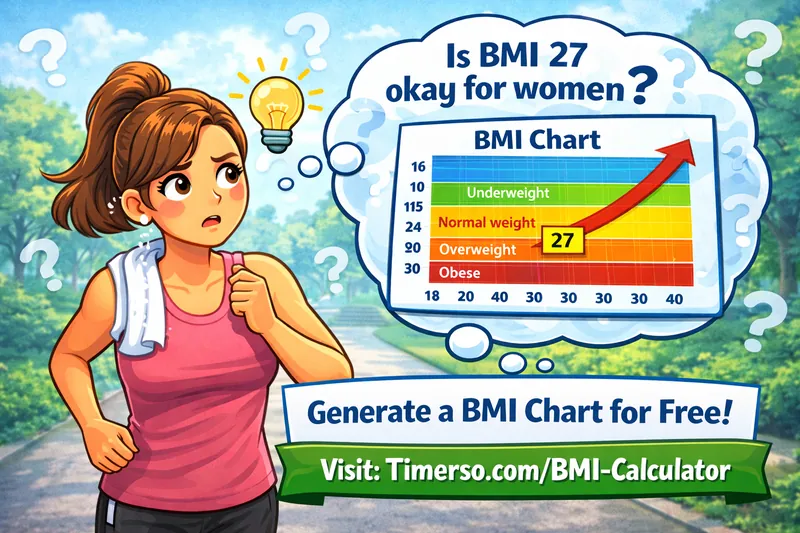
If you have recently stepped on a scale, punched your numbers into a calculator, and received a Body Mass Index (BMI) of 27, you might feel a sudden wave of concern. A quick internet search will readily tell you that a BMI of 27 falls into the "Overweight" category. For many women, this label can be stressful and confusing, especially if you feel healthy and active.
But is a BMI of 27 actually something a woman should worry about?
The straightforward, medical answer is that a BMI of 27 is a screening indicator, not a definitive diagnosis of poor health. For some women, a BMI of 27 is perfectly healthy; for others, it may signal a need to evaluate metabolic habits.
Because women's bodies undergo unique hormonal and physical changes throughout their lives, a one-size-fits-all mathematical formula rarely tells the whole story. Let's break down exactly what a BMI of 27 means for females, when it is "okay," and when it warrants a closer look.
Where Does 27 Fall on the BMI Scale?
Body Mass Index is a simple calculation based on your height and weight. The World Health Organization (WHO) and the Centers for Disease Control and Prevention (CDC) use standard categories for all adults, regardless of biological sex:
- Underweight: Below 18.5
- Healthy Weight: 18.5 – 24.9
- Overweight: 25.0 – 29.9
- Obesity: 30.0 and above
A score of 27 places you precisely in the middle of the "Overweight" range. To monitor your baseline and see how small adjustments in weight affect your category, it is always helpful to use a reliable tool to check your current BMI. By using a free resource like timerso.com, you can accurately track your numbers over time without doing manual math.
Why the Standard BMI Can Be Misleading for Women
The standard BMI formula was created nearly 200 years ago to study general populations, not to diagnose individual women. Biologically, females naturally carry a higher percentage of essential body fat than males (necessary for hormonal function and reproductive health).
Here are the main reasons why a BMI of 27 might be completely "okay" and healthy for a woman:
1. You Lift Weights or Are Highly Active
BMI measures total body weight, but it cannot differentiate between fat, bone, and muscle. Muscle is significantly denser than fat. If you are an athlete, do CrossFit, or regularly engage in resistance training, your muscle mass will naturally push your weight up. A fit, muscular woman with a low body fat percentage can easily have a BMI of 27.
2. The Menopause Transition
As women enter perimenopause and menopause, decreasing estrogen levels naturally shift body composition. You may lose some muscle mass and gain a bit of fat. Furthermore, older adults generally benefit from a slightly higher BMI. The "obesity paradox" in geriatric medicine suggests that for women over 65, a BMI in the 25 to 27 range actually provides a protective nutritional reserve that lowers mortality rates compared to those in the "normal" range.
3. Subcutaneous vs. Visceral Fat
Where you carry your weight is far more important than the scale's number. Women naturally tend to store fat in their hips and thighs (subcutaneous fat). This type of fat is relatively benign. Visceral fat—the fat stored deep in the abdomen around the organs—is what drives metabolic disease. Your BMI cannot tell the difference between the two.
When Should a Woman Be Concerned About a BMI of 27?
While a BMI of 27 is not an automatic red flag, it is a "yellow light." It is your body's cue to check your actual metabolic health. A BMI of 27 becomes a concern if it is accompanied by other risk factors:
- A High Waist Circumference: This is the most accurate way to measure dangerous visceral fat at home. For non-pregnant women, a waist measuring 35 inches or more indicates a higher risk for cardiovascular disease and type 2 diabetes, regardless of your BMI.
- Poor Metabolic Blood Markers: If your BMI is 27 and your doctor finds elevated fasting blood sugar, high blood pressure (above 130/80), or high LDL cholesterol, your weight is likely negatively impacting your health.
- Joint Pain or Fatigue: If carrying the extra weight is causing knee pain, lower back aches, or sleep apnea, it is a sign that your body is under undue stress.
Your Next Action Steps
If your BMI is 27, do not rush into a crash diet. Instead, take a comprehensive approach to your health:
- Track the Trends: Use a tool to check your current BMI periodically, but focus on the trajectory rather than obsessing over the daily number.
- Get a Blood Panel: Schedule a checkup with your primary care physician to test your cholesterol, triglycerides, and HbA1c. If your blood work is stellar and you feel great, your BMI of 27 is likely your body's natural, healthy set point.
- Focus on Body Composition: Shift your goal from "losing weight" to "building muscle and losing fat." Prioritize high-protein meals and strength training.
Conclusion
Is a BMI of 27 okay for females? Often, yes. As long as your waist circumference is in a healthy range, your metabolic blood work is clear, and you are living an active lifestyle, a BMI of 27 is not a reason to panic. Treat the number as a helpful screening tool, but let your daily energy, strength, and clinical lab results be the ultimate judge of your well-being.
Authoritative References for Further Reading (E.E.A.T)
To ensure you are making informed health decisions, consult these trusted, peer-reviewed medical and public health organizations:
- The American College of Obstetricians and Gynecologists (ACOG): Offers evidence-based guidelines on female weight management, body composition, and metabolic health across all reproductive stages and through menopause. (acog.org)
- Centers for Disease Control and Prevention (CDC): Provides the official clinical definitions of BMI, its limitations regarding muscle mass, and guidelines on how women should assess metabolic risk beyond the scale. (cdc.gov)
- The North American Menopause Society (NAMS): Features expert insights into how hormonal shifts during menopause affect fat distribution and why BMI interpretations must evolve as women age. (menopause.org)
- Harvard T.H. Chan School of Public Health: Publishes in-depth research on the dangers of visceral belly fat versus subcutaneous fat, emphasizing why waist circumference is a critical metric for women. (hsph.harvard.edu)
(Disclaimer: This article is intended for educational and informational purposes only and does not constitute medical advice. Because every woman's body composition, genetics, and medical history are unique, always consult with a licensed physician or registered dietitian for a personalized health assessment.)