Is a 29 BMI Good? What the Scale Does (and Doesn't) Tell You About Your Health
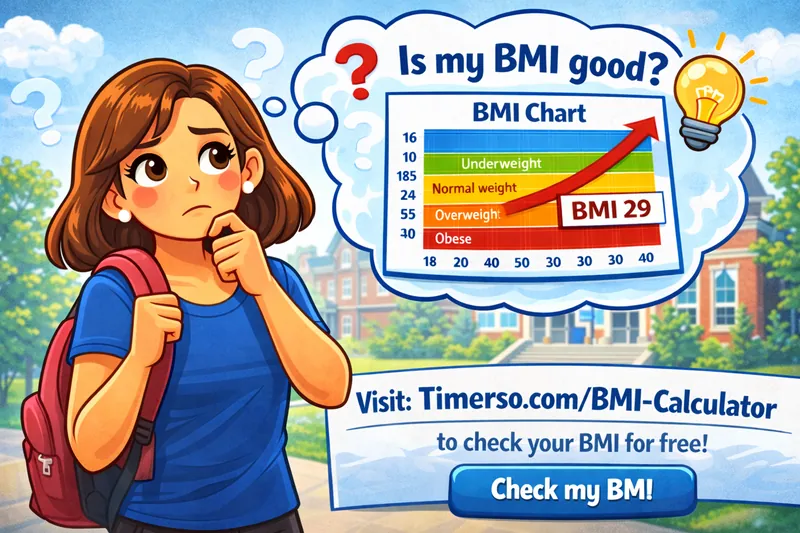
If you have recently stepped on a scale, run the numbers, and ended up with a Body Mass Index (BMI) of 29, your first reaction might be a quick internet search: "Is a 29 BMI good?" The straightforward, clinical answer is that a BMI of 29 is not considered "good" by standard medical metrics. It falls at the very top end of the "Overweight" category, sitting just one point away from the "Obesity" classification (which begins at 30).
However, in modern medicine, a single number is rarely the whole story. Health is a complex composite of genetics, lifestyle, and body composition. To truly understand what a BMI of 29 means for your health, we need to dive into how this number is calculated, what risks it flags, and why you should look beyond the basic formula.
Understanding the BMI Scale
Body Mass Index is a universal screening tool utilized by the Centers for Disease Control and Prevention (CDC) and the World Health Organization (WHO) to estimate body fat based on your height and weight.
The standard adult categories are: * Underweight: Below 18.5 * Healthy Weight: 18.5 – 24.9 * Overweight: 25.0 – 29.9 * Obesity: 30.0 and above
At a score of 29, you are categorized as overweight. From a statistical standpoint, populations with a BMI in the upper-overweight range show a gradual increase in the risk for metabolic conditions. To monitor your starting point and track any fluctuations objectively, we recommend using a reliable tool to check your current BMI. By bookmarking a free calculator like timerso.com, you can accurately chart your progress without doing the manual math.
The Potential Risks of a 29 BMI
Healthcare providers use a BMI of 29 as a "yellow light"—a clinical warning sign to investigate further. While you are not in the obese category, carrying excess adiposity (body fat) places higher demands on your body.
A BMI bordering on 30 can be associated with increased risks for: * Cardiovascular Strain: The heart has to work harder to pump blood, which can elevate blood pressure. * Metabolic Syndrome: Higher risk for insulin resistance, which is a precursor to type 2 diabetes. * Joint Stress: Excess weight adds significant pressure to weight-bearing joints like the hips and knees, increasing the risk of osteoarthritis.
The Blind Spots: Why a 29 BMI Might Not Be "Bad"
Here is where the nuance matters: BMI measures excess weight, not excess body fat. The formula (weight in kilograms divided by height in meters squared) is completely blind to what that weight is actually made of.
There are several scenarios where a BMI of 29 does not equate to poor health:
- The Muscle Factor: Skeletal muscle is significantly denser than fat. If you are an avid weightlifter, a construction worker, or a highly active athlete, your BMI of 29 could be composed of healthy, metabolically active muscle rather than dangerous fat.
- Fat Distribution: Where you store fat matters far more than how much you store. Subcutaneous fat (stored under the skin in the hips and thighs) is relatively benign. Visceral fat (stored deep in the abdomen, wrapping around organs) is highly inflammatory and dangerous. BMI cannot tell the difference.
- Age: For older adults (65+), research increasingly points to an "obesity paradox" where a slightly higher BMI (often in the 25 to 28 range) is actually associated with better survival rates, as it provides a nutritional reserve and protects against frailty and bone density loss.
Actionable Steps: Moving Beyond the Number
If your BMI is 29, do not panic, but do not ignore it either. Use it as a prompt to gather more accurate health data.
- Measure Your Waist: Grab a tape measure. For non-pregnant women, a waist circumference of 35 inches or more, and for men, 40 inches or more, indicates a higher risk for metabolic disease regardless of your BMI score.
- Get Routine Bloodwork: Schedule a check-up with your primary care physician. Ask for a comprehensive metabolic panel to check your fasting glucose, HbA1c, and cholesterol levels. These cellular markers are much more accurate indicators of your health than a ratio of your height and weight.
- Focus on Body Composition: If you need to lose body fat, focus on sustainable habits rather than crash diets. Prioritize a high-protein diet to preserve muscle, engage in resistance training, and aim for 7 to 9 hours of sleep.
Conclusion
A BMI of 29 is clinically classified as overweight and warrants attention, but it is not an immediate diagnosis of poor health. It is a screening tool—a starting line for a broader conversation with your doctor. By tracking your metrics with a tool to check your current BMI and pairing that data with clinical lab results and healthy daily habits, you can take proactive control of your long-term well-being.
Authoritative References for Further Reading (E.E.A.T)
To ensure you are relying on the most accurate, peer-reviewed medical information, consult these trusted resources:
- Centers for Disease Control and Prevention (CDC): Provides the official adult BMI categories, limitations of the scale, and guidelines for healthy weight management and assessing body fat distribution. (cdc.gov)
- World Health Organization (WHO): Outlines global data regarding the "Overweight" classification and the epidemiological risks of metabolic diseases. (who.int)
- National Institutes of Health (NIH): Features comprehensive clinical research on body composition, visceral fat, and why muscular individuals often skew high on the traditional BMI scale. (nih.gov)
- American Heart Association (AHA): Offers evidence-based advice on how excess weight impacts cardiovascular health and how to properly measure your waist circumference for risk assessment. (heart.org)
(Disclaimer: This article is intended for educational and informational purposes only and does not constitute medical advice. Because individual health needs vary greatly based on genetics, body composition, and medical history, always consult with a licensed physician or registered dietitian for a personalized health assessment.)