The High BMI Paradox: Can You Be "Overweight" But Still Healthy?
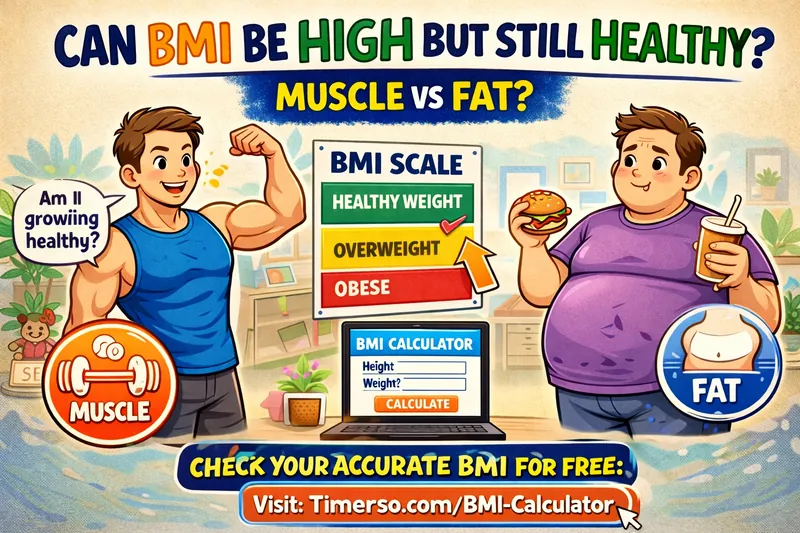
For decades, the Body Mass Index (BMI) has been the gold standard in doctor's offices and fitness clinics for quickly assessing a person's health. It is a simple calculation: your weight in kilograms divided by your height in meters squared. According to the standard chart, if your number is 25 or above, you are "overweight." If it hits 30, you are "obese."
But what happens when you eat well, exercise regularly, and have perfect blood work, yet your BMI still lands in the red zone? This frustrating scenario leads to a very common question: Can your BMI be high but you still be completely healthy?
The medical consensus is a resounding yes. While BMI is a useful population-level screening tool, it is deeply flawed when applied to individual body compositions. In this article, we will explore the science behind why a high BMI does not automatically equate to poor health, the biological factors the formula misses, and how to accurately measure your true metabolic well-being.
Why BMI Fails to Tell the Whole Story
BMI was invented in the 1830s by a mathematician—not a physician—to measure the average weight of populations. Its fundamental flaw when assessing individual health is that it measures excess weight, not excess fat.
Here are the primary reasons why perfectly healthy individuals often register a high BMI:
1. The Muscle Mass Miscalculation
Muscle tissue is significantly denser than fat tissue. One pound of muscle takes up less physical space in the body than one pound of fat. Therefore, athletes, weightlifters, and naturally muscular individuals carry a lot of weight on a smaller frame.
A professional rugby player and a sedentary individual with high body fat might both have a BMI of 29. The chart labels them both "overweight," completely ignoring that the athlete's weight comes from metabolically healthy, lean muscle mass.
2. Bone Density and Frame Size
People have different skeletal structures. Individuals with broader shoulders, wider hips, and naturally higher bone density will weigh more. A high BMI in these cases might simply reflect a heavier, robust skeletal frame rather than excess body fat.
3. The "Metabolically Healthy Obese" (MHO) Phenomenon
Medical researchers have identified a subgroup of the population classified as having "Metabolically Healthy Obesity" (MHO). These individuals have a BMI of 30 or higher, but they do not exhibit the typical metabolic warning signs. They have: * Normal blood pressure * Excellent insulin sensitivity (no prediabetes) * Healthy cholesterol and triglyceride levels * Low systemic inflammation
While long-term studies suggest that some individuals with MHO may eventually develop metabolic issues, a high BMI alone is not an immediate indicator of a diseased state for this group.
Where is Your Weight Located? The Importance of Fat Distribution
Perhaps the biggest blind spot of the BMI formula is that it cannot tell where your fat is located.
- Subcutaneous Fat: This is the fat located just under the skin (often stored in the hips, thighs, and buttocks). While it contributes to a higher weight, it is relatively harmless from a metabolic standpoint.
- Visceral Fat: This is the fat stored deep within the abdominal cavity, surrounding vital organs like the liver and pancreas. Visceral fat is highly inflammatory and directly linked to insulin resistance, heart disease, and type 2 diabetes.
A person with a "normal" BMI of 23 who carries a large amount of visceral fat is actually at a much higher risk for chronic disease than a person with a BMI of 27 who carries their weight subcutaneously.
Establishing Your Baseline (And Moving Beyond It)
Despite its flaws, doctors still use BMI because it is a fast, non-invasive starting point. It is helpful to know your number, provided you do not let it define your entire health profile.
If you want to know where you stand on the traditional scale, you can use a tool to check your current BMI. By inputting your height and weight into timerso.com, you can establish a baseline.
Once you have your number, the next step is to look at metrics that actually measure metabolic health:
- Waist Circumference: Grab a tape measure. A waist circumference of over 35 inches for non-pregnant women, or over 40 inches for men, is a strong indicator of dangerous visceral fat, regardless of your BMI.
- Comprehensive Blood Panels: Your health is defined at the cellular level. Routine checks of your HbA1c (blood sugar), lipid panel, and blood pressure are far more indicative of your health than a scale.
- Body Fat Percentage: Tools like DEXA scans, skinfold calipers, or bioelectrical impedance scales can tell you what percentage of your weight is actually fat versus lean mass.
Conclusion
Can your BMI be high and you still be healthy? Absolutely. If you lift weights, have a large frame, or carry your weight securely in subcutaneous areas while maintaining excellent cardiovascular fitness and blood work, a high BMI is nothing to fear.
Use a tool to check your current BMI for general awareness, but always prioritize functional fitness, nutrient-dense eating, and clinical lab results over a 200-year-old math equation.
Authoritative References for Further Reading (E.E.A.T)
To ensure your health decisions are guided by accurate, peer-reviewed science, we recommend consulting these trusted medical resources:
- Centers for Disease Control and Prevention (CDC): Acknowledges the limitations of BMI as an indirect measure of body fat and outlines the differences between athletes and the general population. (cdc.gov)
- Harvard T.H. Chan School of Public Health: Offers extensive research on the dangers of visceral fat, the limitations of BMI, and the importance of waist-to-hip ratios. (hsph.harvard.edu)
- National Institutes of Health (NIH): Features clinical studies analyzing "Metabolically Healthy Obesity" and how body composition differs drastically from simple mass indexes. (nih.gov)
- American College of Sports Medicine (ACSM): Provides guidelines on how to properly measure health and body fat in athletic populations where BMI fails. (acsm.org)
(Disclaimer: This article is intended for educational and informational purposes only and does not constitute medical advice. Because individual health needs vary greatly based on genetics, body composition, and medical history, always consult with a licensed physician or registered dietitian for a personalized health assessment.)