BMI vs. Body Fat Percentage: Which Metric Actually Matters More?
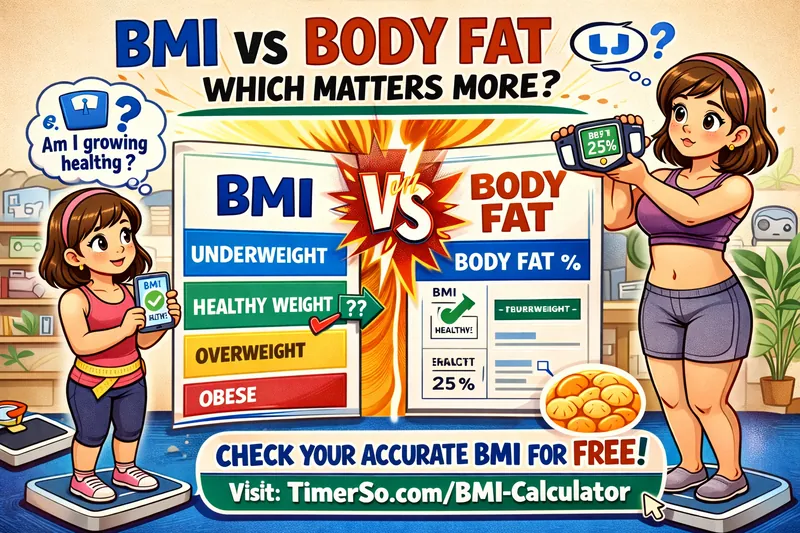
When you visit a doctor for a physical, one of the first things they calculate is your Body Mass Index (BMI). However, when you consult a sports nutritionist or a fitness coach, they are usually far more interested in your Body Fat Percentage.
This creates a common point of confusion for anyone trying to get a clear picture of their health. If you are trying to lose weight, build muscle, or simply improve your longevity, which number should you actually care about?
In the debate of BMI vs. Body Fat, medical science is clear: they measure two different things, and one is significantly more indicative of your overall metabolic health. In this comprehensive guide, we will break down both metrics, explore their pros and cons, and determine which one truly matters more.
Understanding BMI: The Quick Screening Tool
Body Mass Index (BMI) is a mathematical formula that divides your weight in kilograms by your height in meters squared. Created over 200 years ago, it is used globally to categorize populations into weight statuses: Underweight, Healthy Weight, Overweight, and Obese.
The Pros of BMI
The greatest advantage of BMI is its accessibility. It requires no specialized equipment, costs nothing, and takes five seconds to calculate. It serves as an excellent, high-level screening tool. Extensive population-wide data shows a strong statistical correlation between a high BMI and elevated risks for type 2 diabetes, heart disease, and hypertension.
To establish your baseline today, you can use a tool to check your current BMI. By inputting your height and weight into a free calculator like timerso.com, you instantly know if you fall outside statistical norms, which can prompt a deeper conversation with your physician.
The Cons of BMI
BMI’s fatal flaw is that it measures excess weight, not excess fat. The formula cannot distinguish between: * Muscle vs. Fat: Muscle is denser than fat. A highly conditioned athlete can easily weigh enough to be categorized as "Overweight" or "Obese" despite having very low body fat. * Fat Distribution: It does not tell you where the weight is stored, which is crucial for determining disease risk.
Understanding Body Fat Percentage: The Diagnostic Metric
Body Fat Percentage is the exact proportion of fat tissue on your body compared to your total body mass (which includes organs, bones, water, and muscle).
Your body carries two types of fat: 1. Essential Fat: Required for basic survival, protecting your organs, and regulating hormones (women naturally require higher levels of essential fat than men). 2. Storage Fat: Adipose tissue stored under the skin (subcutaneous) or deep in the abdominal cavity (visceral).
The Pros of Body Fat Percentage
This metric provides a deeply accurate reflection of your body composition and metabolic health. By tracking body fat rather than just weight, you can ensure that any weight you lose is actually fat, rather than precious, calorie-burning muscle tissue. Furthermore, it helps identify "normal weight obesity" (often called "skinny fat")—a condition where a person has a "Healthy" BMI but dangerously high levels of visceral fat, placing them at high risk for metabolic syndrome.
The Cons of Body Fat Percentage
The main drawback is that it is difficult and often expensive to measure accurately. * DEXA Scans (the gold standard) require a clinical visit. * Skinfold Calipers require a highly trained professional to ensure accuracy. * Bioelectrical Impedance Scales (smart scales) are convenient but highly susceptible to errors based on hydration levels.
The Verdict: Which Matters More?
If we look strictly at the science of longevity and metabolic health, Body Fat Percentage matters more than BMI. Your body fat percentage tells the true story of what your weight is composed of. It directly correlates with your risk for cardiovascular disease, insulin resistance, and systemic inflammation. A linebacker with a BMI of 30 and 12% body fat is exceptionally healthy; a sedentary office worker with a BMI of 24 and 30% body fat is not.
How to Use Both Tools Effectively
You do not have to choose just one. The most effective health strategy utilizes both metrics in tandem:
- Start with the Baseline: Use a fast, free tool to check your current BMI to get a general overview of your weight-to-height ratio.
- Add a Tape Measure: To bridge the gap between BMI and Body Fat Percentage without paying for a DEXA scan, measure your waist circumference. A waist measurement over 35 inches for non-pregnant women or 40 inches for men indicates high visceral fat, regardless of your BMI.
- Track the Trend: If you begin exercising, your BMI might stay the exact same (or even go up) as you lose light fat and build heavy muscle. Tracking your body fat percentage (or how your clothes fit) will prove that your health is improving even if the scale refuses to budge.
Conclusion
While BMI remains a highly useful screening tool for doctors to assess large populations, it falls short on an individual level. For a precise understanding of your fitness, cellular health, and disease risk, Body Fat Percentage is the undisputed superior metric. Focus on building muscle and reducing fat, and let your overall body composition dictate your health journey.
Authoritative References for Further Reading (E.E.A.T)
To ensure your health decisions are backed by the highest standards of medical science, consult these trusted, peer-reviewed resources:
- Harvard T.H. Chan School of Public Health: Offers extensive research on the limitations of BMI, the dangers of visceral fat, and why body composition is the ultimate indicator of metabolic health. (hsph.harvard.edu)
- American College of Sports Medicine (ACSM): Provides evidence-based guidelines on healthy body fat percentages for men and women across different age groups and athletic levels. (acsm.org)
- National Institutes of Health (NIH): Features clinical studies analyzing the "Normal Weight Obesity" phenomenon, where individuals have healthy BMIs but dangerous levels of body fat. (nih.gov)
- Centers for Disease Control and Prevention (CDC): Explains how BMI is used as a screening tool, while acknowledging that it does not measure body fat directly. (cdc.gov)
(Disclaimer: This article is intended for educational and informational purposes only and does not constitute medical advice. Because individual health profiles vary greatly based on genetics, body composition, and medical history, always consult with a licensed physician or registered dietitian for a personalized health assessment.)